
Knowing how to comfort your friend after a breakup over text is one of those emotional skills most people underestimate until they are in the middle of it. From a psychological standpoint, a breakup is not just the end of a relationship; it is a sudden disruption to emotional safety, identity, routine, and future expectations.
When your friend’s phone lights up with your message, it can either soothe her nervous system or unintentionally make her feel more misunderstood. After years of working with emotional processing and interpersonal support, one thing is clear: words matter most when someone feels emotionally raw, and timing matters just as much as wording.
For many women, breakups don’t just hurt emotionally; they trigger self-doubt, overthinking, and a sense of personal failure, even when the breakup was not their fault. Texting is often the first and most consistent form of support she receives, especially late at night when emotions intensify.
Learning how to comfort your friend after a breakup over text means learning how to be emotionally present without trying to fix what cannot be fixed overnight.
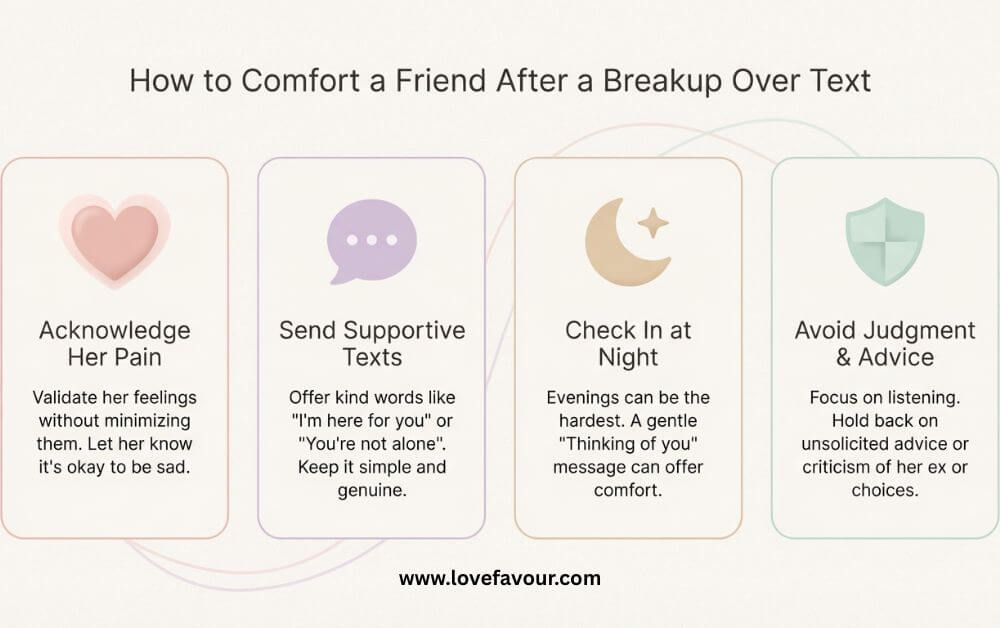
1. Why Text Support Is So Powerful After a Breakup
Psychology shows that emotional pain activates the same brain regions as physical pain. After a breakup, your friend’s nervous system may stay in a heightened state for days or weeks.
Text messages provide a form of connection that feels safe because they allow emotional distance and control. She can read your words when she’s ready, reread them when she spirals, and respond only if she has the emotional energy.
For many women in the US, especially those balancing work, family, and social expectations, texting is the least demanding form of connection. That’s why understanding how to comfort your friend after a breakup over text is not about saying the perfect thing, but about creating emotional steadiness through consistency and empathy.
2. Start With Validation, Not Advice
One of the most common mistakes people make is rushing into advice. From years of psychological observation, advice almost always lands poorly in the early stages of heartbreak. The brain cannot process solutions until it feels emotionally understood. Validation comes first.
Helpful opening texts include statements like “I’m really sorry you’re going through this” or “What you’re feeling makes so much sense.” These phrases calm the emotional alarm system and reduce the feeling of being judged or rushed. They tell your friend she is allowed to feel exactly what she is feeling.
Avoid starting with “You’ll be fine,” “Everything happens for a reason,” or “This is for the best.” While these may be true later, they often feel dismissive in the moment. When learning how to comfort your friend after a breakup over text, remember that empathy always comes before reassurance.

3. What to Say When You’re Afraid of Saying the Wrong Thing
Many women hesitate to text a heartbroken friend because they fear making it worse. In reality, silence often hurts more than imperfect words. From a psychological perspective, sincerity matters more than precision.
Messages like “I don’t know the perfect thing to say, but I care about you, and I’m here” are powerful because they are honest. They remove pressure from both sides. Another effective approach is reflective listening, even over text. For example, “It sounds like you’re feeling really blindsided and hurt right now.” This shows understanding without trying to solve anything.
Short messages are often better than long emotional essays, especially in the first few days. Emotional overload can make it hard to read or respond.
Also read: Signs He Is Hurting After the Breakup (From Real Experience)
4. Understanding How Women Process Breakups Emotionally
To truly master how to comfort your friend after a breakup over text, it helps to understand how many women experience heartbreak. Breakups often trigger rumination, self-blame, and emotional looping. Your friend may replay conversations, question her worth, or wonder what she did wrong.
Some women express sadness openly and need reassurance. Others internalize pain and appear “strong” while struggling privately. Some feel anger, which is often a protective emotion masking deeper hurt. Your texts should adapt to her emotional style rather than forcing a one-size-fits-all response.
Attachment style also plays a role. Anxiously attached friends may need more frequent reassurance. Avoidantly attached friends may withdraw and resist emotional conversations. Comforting them means respecting their space while reminding them you’re available.
5. What to Text During Late-Night Emotional Waves
Late nights are often the hardest after a breakup. Distractions fade, and intrusive thoughts become louder. From experience, supportive texts during these hours can have an outsized impact.
Examples include “Nights can feel really heavy after a breakup, I know. If you’re awake and struggling, I’m here” or “Just checking in before bed to remind you that you’re not alone.” These messages anticipate emotional needs rather than reacting to them.
Avoid pushing the conversation if she doesn’t respond. The message itself still provides comfort.

6. What Not to Say When Comforting a Friend Over Text
Knowing how to comfort your friend after a breakup over text also means knowing what to avoid. Certain phrases, though common, often increase emotional pain.
Avoid minimizing statements such as “At least it didn’t last longer” or “You dodged a bullet.” Avoid comparisons like “My breakup was worse.” Avoid pressure-based language such as “You need to move on” or “You should be over this by now.”
Another mistake is speaking negatively about her ex too aggressively. While validation is helpful, extreme negativity can complicate emotional processing later and increase confusion.
7. How Often Should You Text After a Breakup
There is no fixed rule, but emotional pacing is key. In the first few days, one or two supportive texts per day can feel grounding. As time passes, let her responses guide you. If she replies briefly or not at all, reduce frequency without disappearing.
A helpful message might be “I don’t want to overwhelm you, but I’m thinking of you and here whenever you want to talk.” This restores a sense of control, which is often lost during a breakup.
8. Using Distraction Without Avoiding Feelings
Distraction can be healthy when used correctly. From a psychological perspective, it should come after emotional validation, not instead of it. Sending a funny meme or suggesting a light activity works best once your friend feels heard.
You can say “This hurts a lot, and it’s okay to feel it. If you want a break from heavy thoughts later, I’m happy to send something lighter.” Giving her a choice respects her emotional autonomy.

9. Encouraging Healing Without Forcing Positivity
Healing after a breakup is not linear. Some days will feel lighter, others heavier. One of the most psychologically supportive things you can do is normalize this process.
Helpful texts include “Healing isn’t a straight line” or “Bad days don’t mean you’re not making progress.” These messages reduce self-judgment and prevent emotional suppression.
Avoid timelines or expectations. Pressure to heal often prolongs pain rather than resolving it.
Also read: How to Be a Good Girlfriend: 15 Essential Tips for a Healthy Relationship
10. When to Gently Suggest Professional Support
If your friend shows signs of prolonged distress, withdrawal, or hopelessness, suggesting professional help can be supportive when done gently. Frame it as care, not correction.
For example, “You don’t have to carry all of this alone. Talking to someone trained to help with heartbreak could really support you.” This reduces stigma and communicates concern without judgment.
11. Final Thoughts From Psychological Experience
Learning how to comfort your friend after a breakup over text is about emotional presence, patience, and empathy. You are not there to fix her pain or rush her healing. You are there to remind her that she is not alone while she finds her footing again.
Text messages may seem small, but emotionally, they can become anchors during moments of deep vulnerability. When your words come from understanding rather than discomfort with pain, you offer something far more valuable than advice: emotional safety.
Frequently Asked Questions
1. How do I comfort my friend after a breakup over text if she doesn’t reply
Give her space while staying consistent. Occasional gentle check-ins show care without pressure.
2. Is it okay to distract her with jokes or memes
Yes, but only after acknowledging her feelings. Distraction without validation can feel dismissive.
3. Should I talk badly about her ex to make her feel better
Avoid extreme negativity. Validation is helpful, but excessive criticism can complicate healing.
4. How long should I keep supporting her
There is no fixed timeline. Let her emotional cues guide the level of support.
5. Can texting really help someone heal from a breakup
Yes. Emotionally supportive messages can reduce isolation, regulate emotions, and reinforce social safety.
1 thought on “How to Comfort Your Friend After a Breakup Over Text”